

Wasps and hornets are both a common sight throughout the UK, especially during the summer. Still, many people don’t realise the difference between them.
While wasps and hornets are similar, they also have unique characteristics that can set them apart. As an experienced provider of wasp nest removal across Bradford, Wakefield, Huddersfield, Leeds, Halifax, West Yorkshire and other regions of the UK, including Sheffield, Blackpool, Manchester, York and beyond, Copley Pest Solutions understands the difference between wasps vs hornets, which is why we’ve put together this handy guide.
Are Wasps And Hornets The Same?
Hornets are a type of wasp. So, while all hornets are wasps, not all wasps are hornets. There are around 9000 different wasp species in the UK, and most wasps are solitary and live alone.
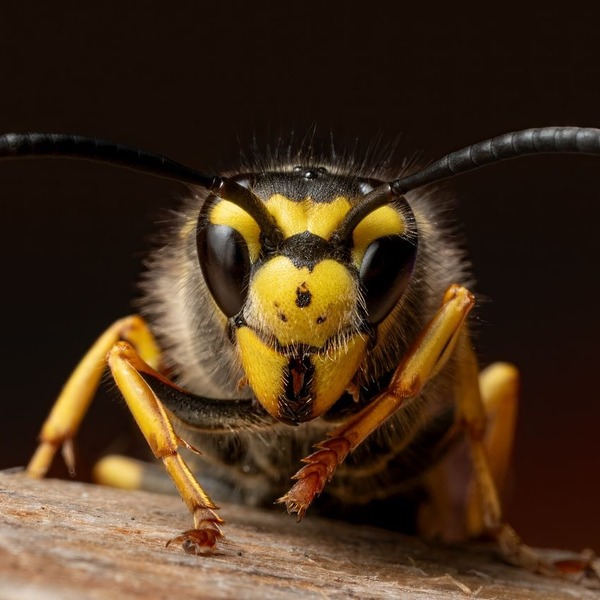
There are several social wasp species, including common wasps (Vespula vulgaris) and German wasps (Vespula germanica), which form large colonies and can cause issues for humans when they build nests nearby.
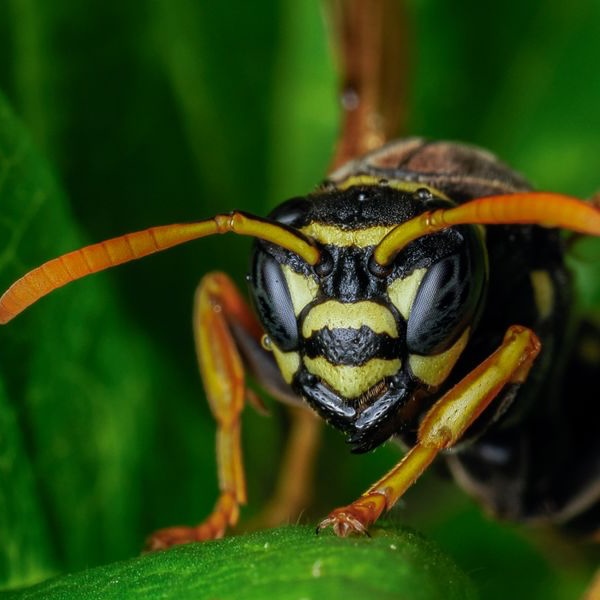
Within the 9000 species of wasps in the UK, there are just 2 hornet species. European hornets (Vespa crabro) are a native species, while the larger and darker Asian hornets (Vespa velutina) are an invasive, non-native species that harm bee populations and native insects.
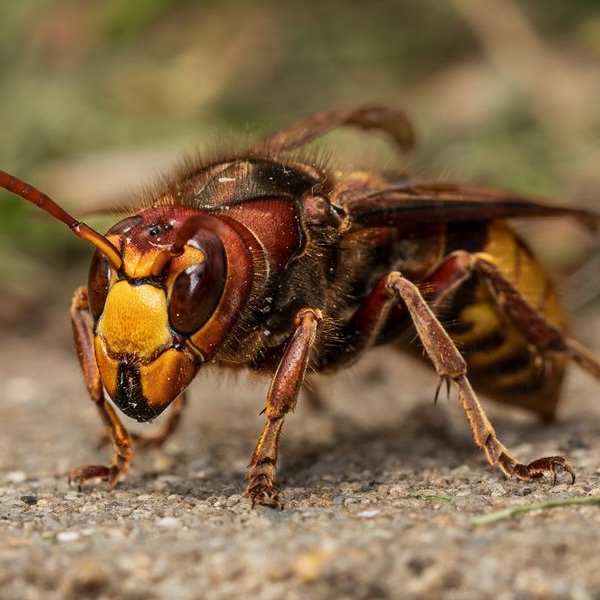
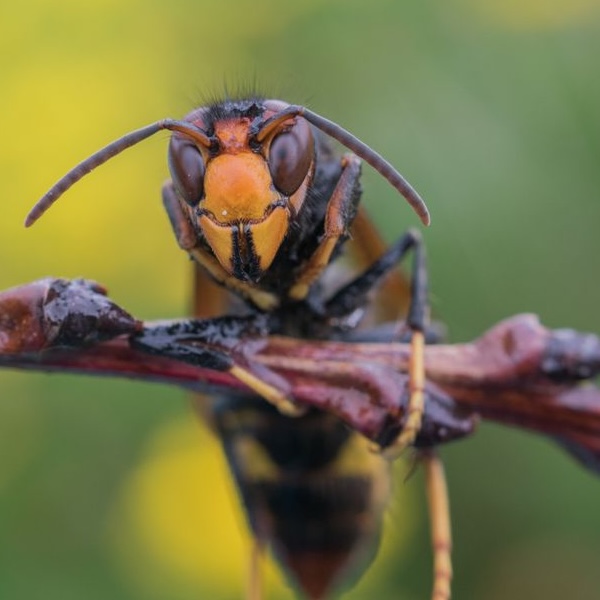
While Asian hornets are uncommon, if you notice a larger hornet with a dark body and distinctive yellow legs, you should report the sighting immediately.
Differences Between Wasps Vs Hornets
There are many similarities between wasps and hornets, including their life cycles, but there are also several distinct differences, as listed below.
Appearance
Hornets are significantly larger than wasps, and are reddish brown in colour with black undertones and muted yellow stripes. Wasps, on the other hand, are smaller and many species, including common wasps, have the distinctive black and yellow stripes clearly visible. Hornets also usually have a thicker waist area than wasps, which have a distinctive narrow waist.
Behaviour
Hornets and wasps have similar behaviour generally, but hornets are known to be more territorial around their nests. However, wasps are more aggressive even when unprovoked. So, if you’re not near a nest and get stung, the likely culprit is a wasp. If you go close to a nest and get instantly mobbed, the issue could be hornets.
Nesting Habits
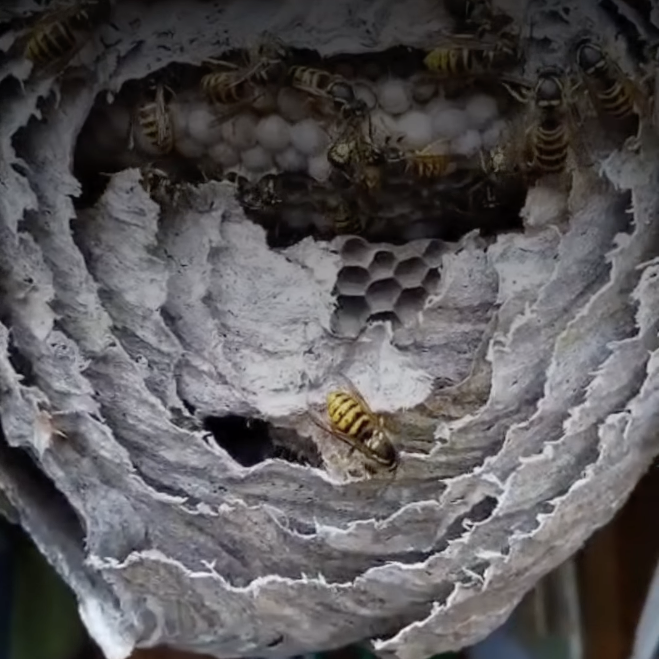
Both wasps and hornets use their nests for one season, but their nesting habits are slightly different. Wasps tend to build nests, which can range from the size of a golf ball to a basketball or larger, inside tight spaces, such as garden sheds, roof spaces, attics, chimneys or wall voids. Also, while hornets tend to build large, round nests high up in trees, wasps prefer tight spaces. Wasp nests often stretch and spread out to fill the area they’re build in.
Ecological Impact
Wasps and hornets are both predators that eat a variety of different insects, which can act as a natural form of pest control. Smaller wasp species eat aphids, spiders and flies. Hornets are slightly larger, so they can eat bigger insects, including other wasps. Invasive Asian hornets can cause issues with local habitats and ecosystems, which is why these hornets need to be reported.
How Do Wasps And Hornets Differ From Bees?
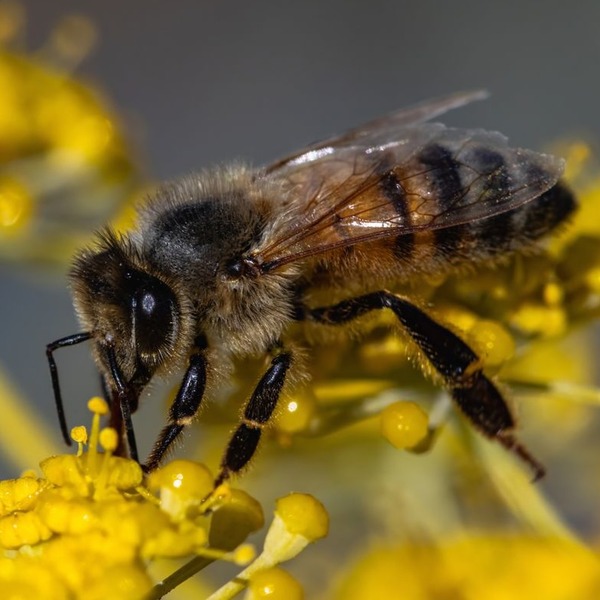
Wasps and hornets are often mistaken for bees, particularly honey bees (Apis mellifera), which have similar narrow waists. Some of the main differences between wasps, hornets and bees include:
- Diet: Wasps and hornets are omnivorous and eat insects as well as nectar and sugary substances. Bees only eat nectar and pollen.
- Sting: While wasps and hornets have a smooth sting, which allows them to sting repeatedly, bees have a barbed sting. This gets stuck in the skin and pulls out of the bee’s body, causing it to die. As such, bees are usually less aggressive and less likely to sting.
- Nest Materials: Wasps and hornets usually build nests from wood fibres mixed with saliva, while bees build waxy nests made from honeycomb. Hornet and wasp nests are usually enclosed with a protective outer layer of wood pulp, hiding the internal hexagonal cells. Bee nests often have these cells, into which eggs are laid, on the outside of their nests, as they typically build nests inside enclosed spaces.
- Nesting Habits: While hornet and wasp nests only last one season, bees often use their nests for several years, especially honey bees.
- Size: Honey bees and other bee species are often smaller than wasps and especially hornets. Bees are also usually stouter in body shape.
- Appearance: The main difference between honey bees and wasps is that honey bees are covered in small hairs. Their hairy bodies allow the bees to collect and distribute pollen. Wasps have smooth, mostly hairless bodies.
Identifying The Species On Your Property
Identifying the species you’re dealing with can help you to keep yourself and your family safe, as well as making it easier for pest controllers to deal with the problem if you decide to call us in. Some simple ways to tell the difference between these three insects are listed below:
- Find The Nest: Each species builds a different type of nest. Only social insects cause an issue to humans, so if you find a nest underground with just a few bees or wasps, then this is not a cause for concern. If you notice a large, social nest, take a photograph of it, as this can help with identification.
- Photograph The Insects: Taking pictures of such small insects, especially when they’re flying around, can be challenging, but try to take a picture where you can to make it easier to identify the species. If you can’t photograph a live insect, look around for a body, as worker wasps and bees have short lifespans and you might find one nearby.
- Check Stings: If you get stung by one of the insects, check the sting to see what it looks like. A smaller red welt without a sting left in it is likely to be a wasp sting, while a larger red mark without a sting left in it is likely to be a hornet sting. If there is a barbed sting left inside the wound, then this could indicate a bee sting.
If you’re still unsure what kind of stinging pest you have on your property, Copley Pest Solutions will be happy to help.
Wasps Vs Hornets: Conclusion
Ultimately, hornets are a type of wasp, and both species, alongside bees, play an important role in our ecology. As such, if you find a nest of any type on your property and it is out of the way and not causing any problems, then the best thing to do is to leave it alone.
If you find a large, social nest that is near or on your property, particularly inside your home, then you need fast treatment. Copley Pest Solutions has local pest technicians based throughout West Yorkshire and the UK, so we can quickly identify the pest species you’re facing and provide guidance and treatment.
Even old wasp or hornet nests need to be handled carefully, as they can become a haven for other insects, including ants, fleas and carpet moths. As such, it’s important that you remove them, and learn how to keep wasps away from your garden and home.
To book wasp or hornet nest removal and get professional advice on your pest problem, contact us on 08003029447.