

How long does a wasp nest last? Most wasp nests in the UK are only used one single season, which is usually 3-4 months.
This applies to social wasp nests, which are made from chewed wood pulp and wasp saliva, and generally range from the size of a golf ball to a basketball or sometimes larger.
As much as wasps are natural pest control, because they eat aphids, spiders and other insects, they can also cause issues. Social wasp nests can be dangerous, as worker wasps flying in and out can sting if they feel threatened. Unlike bees, wasps can sting as many times as needed without dying, and these stings can be painful and cause skin irritation, infections and even analytic shock for those with allergies.
As such, it’s important that you learn how to keep wasps away, and that you understand how to identify a wasp nest
Copley Pest Solutions are leading providers of wasp nest removal for homes and businesses across Bradford, Wakefield, Huddersfield, Leeds, Halifax, West Yorkshire and other regions of the UK, including Sheffield, Blackpool, Manchester, York and beyond.
To help you understand the life cycle of a wasp nest, we’ve put together this informative guide that answers all your key questions.
Wasp Nest Types
In the UK, there are over 9000 different wasp species found, most of which are solitary wasps. Solitary wasps live alone for most of their lives, and build small nests underground or inside trees.
These wasps rarely cause issues for homeowners, as they have small nests just for themselves and aren’t usually aggressive, as they don’t have a nest to protect.
The most prevalent wasp species in the UK, including common wasps, German wasps and European hornets, are all social wasp species. Learn more about how to tell the difference between wasps and hornets in our guide: Wasps VS Hornets: How To Tell The Difference.
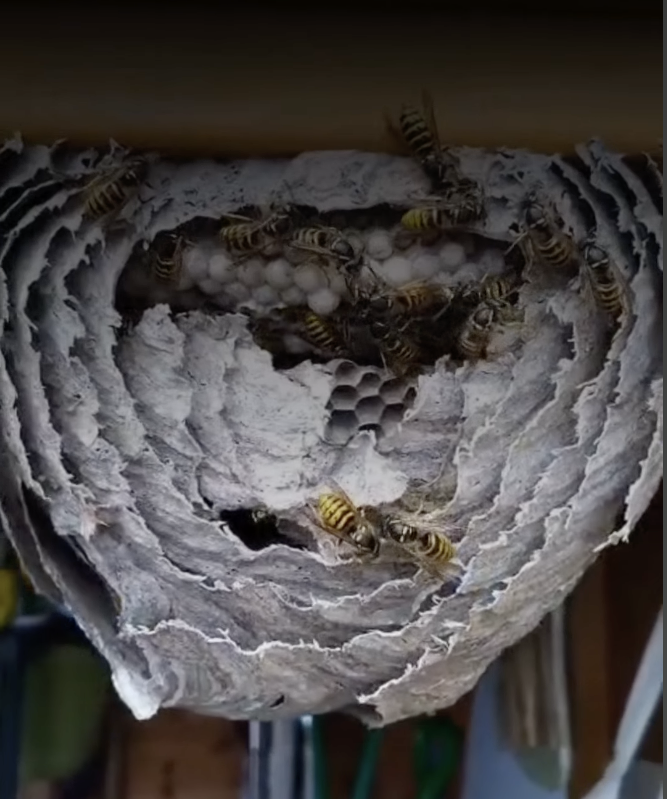
Social wasps build large nests from chewed wood pulp and saliva, where their lives revolve around a single queen wasp, who is the reproductive hub of the colony. She is supported by worker wasps, who are sterile females, and drones, who are fertile males.
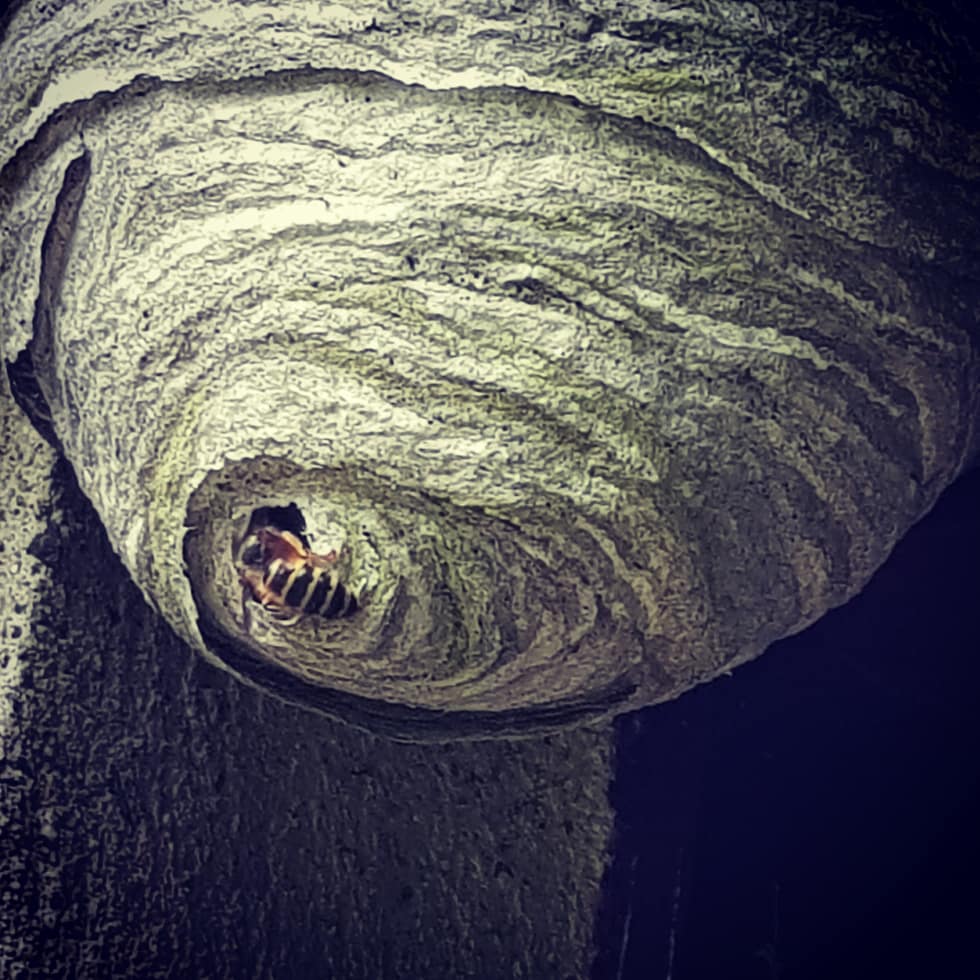
These social wasp nests are the ones that you need to watch out for. They are usually grey to brown in colour, with a swirling pattern and a small hole for wasps to enter and exit through.
Stages Of A Wasp Nest
As mentioned above, social wasp nests are the issue. The colony grows with the nest, and the wasps can be aggressive if disturbed. The stages of social wasp nests are:
- Building The Nest: Wasp colonies usually start in spring, with the queen building a nest in sheltered areas such as hanging from tree branches, inside roofs and on porches or other covered spaces. She uses chewed wood pulp and saliva to create the structure, and building hexagonal cells so she can lay eggs.
- Expansion: The nests start at the size of a golf ball, but can quickly grow as the colony gets bigger. The nest is at its largest and most active in the summer, as the worker wasps take over construction and start searching for other insects to feed to the wasp larvae, who grow into adult wasps.
- Colony Decline: In the late summer the nest dies off, and the queen breeds new queens and drones who go off and mate in large swarms.
- Hibernation: When the cold weather comes in the winter, the old queen, worker wasps and drones die off, leaving the new queens, who hibernate until next spring.
- Rejuvenation: When the warmer weather comes, the fledgling queens emerge and start building new nests and the cycle begins again.
What Happens To Old Wasp Nests?
Old, empty wasp nests aren’t reused when the colony dies, and new queens build a fresh nest each year for their offspring.
The old nests can be taken over by other insects, including spiders, ants, moths and some solitary bees. As such, old wasp nests can still cause a pest problem.
Old nests can also be unsightly and, being made from wood pulp, they can be a fire hazard if they are built near electrical wiring, lighting or other sources of heat.
Do Wasp Build New Nests Near The Old One?
When wasps return in the spring, they don’t use the same nest. However, they may use the same location, building a new nest near to the old one.
That’s because they know that the previous nest area is safe, sheltered and has a reliable food source, so they will build a new nest nearby.
As such, it’s important that you don’t just remove the old nest, but that you eradicate the entire colony to prevent future wasp activity in your home, garden or commercial site.
How To Get Rid Of Wasp Nests Permanently
If you need to get rid of a wasp nest, it’s important that you work with trusted local professionals like Copley Pest Solutions.
For active wasp nests, wasps inside the nest can sting as soon as they notice the nest being moved. Additionally, if you do not remove the entire nest and colony, the wasps will return.
Even old nests need to be handled carefully, as they can become a haven for other insects, including ants, fleas and carpet moths.
If old nests are built inside wall cavities, chimneys or roofs, they can require specialist removal to ensure the structural integrity of your property.
Copley Pest Solutions has fully-trained, RSPH level 2 certified staff who have the experience, skills and personal protective clothing needed to safely and effectively remove wasp nests of all sizes and types.
To book wasp nest removal and get professional advice on your wasp problem, contact us on 08003029447.